Some days, they could not.
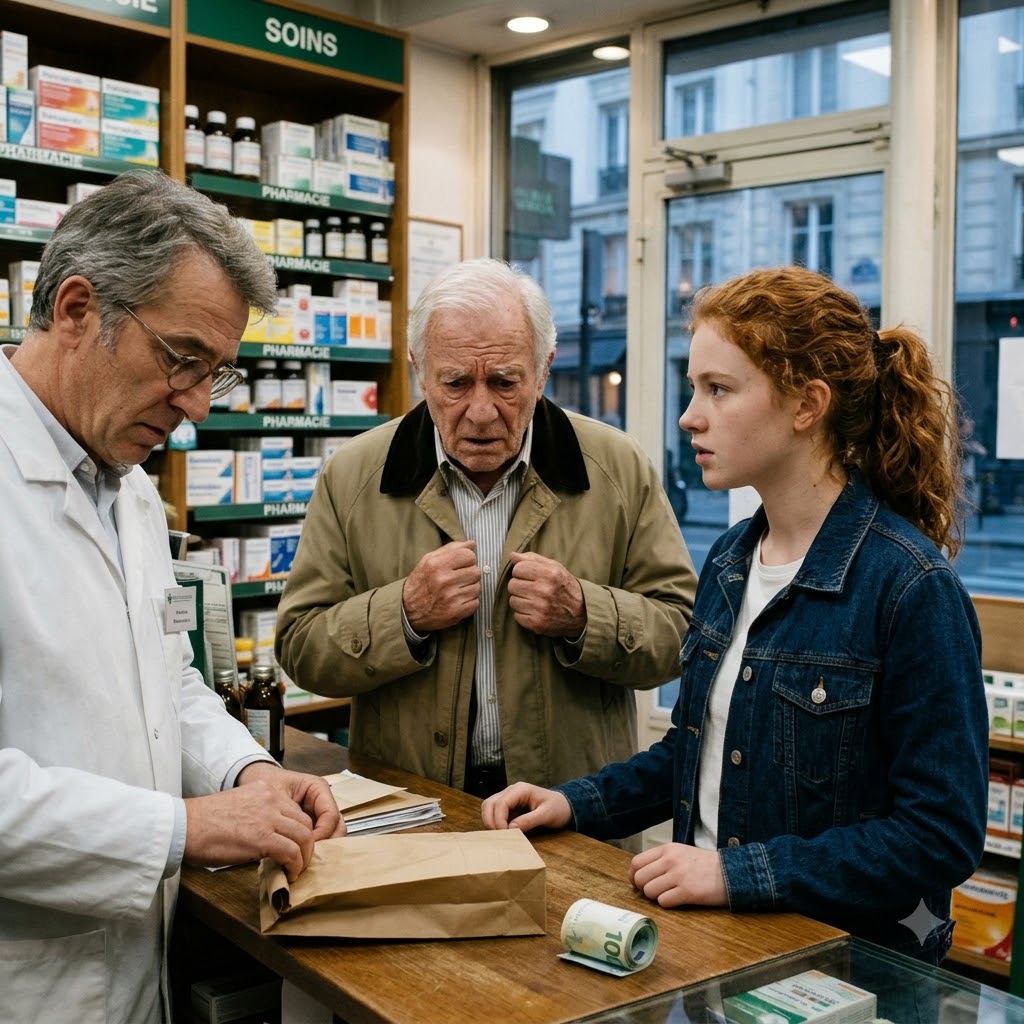
At ten that morning, an elderly rancher named Walter came to the counter with a folded prescription.
Walter had been a friend of Daniel’s father.
His left knee bent badly from an injury many years before, and his hands were thick and knotted from decades of ranch work.
“Morning, Danny.”
“Morning, Mr.
Walter.
How’s the knee?”
“Still attached.
That’s about the best I can say.”
Daniel smiled.
“Then we’re doing all right.”
Walter leaned on the counter.
“Your mother managing?”
“She says she is.”
Walter chuckled.
“That means she’s probably doing twice as much as she should.”
“Exactly.”
The old rancher looked at him more carefully.
“You look tired, son.”
“Long week.”
“Long weeks have a way of becoming long years if you’re not careful.”
Daniel handed the prescription to Mrs.
Avery for review.
Walter waited in silence.
Then he said, “Your father used to worry like you do.”
Daniel looked up.
“Did he?”
“Every spring.
Every fall.
Every time cattle prices dropped.”
“He never seemed worried to me.”
“That was because you were his boy.”
Walter rested both hands on his cane.
“He used to say he could lose a hundred dollars in a bad deal and sleep like a baby.
But if he thought he’d let somebody down, he’d lie awake all night.”
Daniel smiled faintly.
“That sounds like him.”
Walter nodded.
“Sounds like you too.”
Daniel busied himself with a stack of receipts.
He was uncomfortable when people praised him.
He had never thought of himself as especially good.
Most days, he was simply trying to do what needed doing.
When Walter’s prescription was ready, Daniel brought it to the counter.
Walter searched through his coat pocket and produced a few bills.
He counted them slowly.
There was enough.
Daniel could see the relief pass across the old man’s face.
It was small.
Almost invisible.
But Daniel noticed.
He noticed because he had seen the same relief in his wife’s eyes when an unexpected expense turned out smaller than they feared.
“Take care on that western road,” Daniel said as Walter left.
“Always do.”
Walter paused near the door.
“And Danny?”
“Yes, sir?”
“Tell your mother I’ll bring her some potatoes from the cellar.”
Daniel smiled.
“She’ll tell you she doesn’t need them.”
“I know.”
“Bring them anyway.”
Walter laughed and went out into the sunshine.
Daniel watched him cross the street.
Then he returned to work.
For the next several hours, there was scarcely a quiet moment.
A delivery arrived late.
A customer argued about an insurance denial.
A worried mother called twice about her son’s prescription.
A ranch worker came in with mud on his boots and apologized for tracking dirt across the floor.
Daniel fetched a mop before the man could become embarrassed.
By noon, his feet ached.
He ate half a sandwich behind the counter during his short break.
It was bread, cheese, and mustard.
Hannah had packed an apple with it.
On the paper bag, she had written:
Don’t forget to eat.
He smiled when he saw it.
Then he put the note into his jacket pocket.
Such things mattered to him.
When life became difficult, he held on to the small evidence that he was loved.
A note in a lunch bag.
Ellie’s crooked drawings.
His mother’s voice on the telephone.
Hannah’s hand reaching for his beneath the blankets when the house was cold.
They were not things money could buy.
But money had a way of threatening the peace around them.
By late afternoon, clouds had covered the mountains.
The wind turned sharper.
Rain began falling across Pine Creek, first in scattered drops, then in heavy sheets that darkened the road and blurred the windows.
Cold rain was uncommon enough at that time of year to make people nervous.
Daniel watched it strike the pharmacy window.
He thought about his mother driving into town the following morning.
He hoped she would stay home until the weather improved.
At four-thirty, Hannah called.
Daniel answered from the break room.
“Hey.”
“How’s your day?”
“Busy.
Yours?”
“I worked the breakfast shift, then helped at the stable.”
“Did they pay you?”
“Some of it.”
Daniel closed his eyes.
“How much?”
“Twenty dollars.
They said they’ll give me the rest next week.”
He rubbed his forehead.
“All right.”
“Daniel.”
“What?”
“I can hear you thinking.”
He laughed without much humor.
“That bad?”
“That loud.”
He leaned against the wall.
“Maybe I can ask Martin for extra hours Saturday.”
“You already worked last Saturday.”
“I know.”
“And the Saturday before.”
“Hannah—”
“Ellie asked if you could take her riding this weekend.”
Daniel looked at the rain-streaked window.
He had promised his daughter they would visit the stable.
A friend kept a gentle old mare named Daisy there, and Ellie loved brushing her.
“I’ll take her,” he said.
“You don’t have to do everything.”
“I know.”
But he wanted to.
He wanted to be the man who earned enough money and still had time to sit beside his daughter on a fence.
He wanted to be the husband who came home smiling instead of counting expenses in his head.
He wanted to visit his mother without thinking about how much fuel the trip would cost.
Sometimes he wanted those things so badly that wanting them became another burden.
Hannah’s voice softened.
“Did you eat?”
“Most of the sandwich.”
“The whole sandwich, Daniel.”
“Yes, ma’am.”
She laughed.
It was a sound he never grew tired of.
Then she said, “I found another ten dollars in the jar behind the flour.
We can add it to the boot money.”
Daniel straightened.
“Really?”
“Really.”
“That should put us close.”
“It will.”
He imagined Ellie standing in the shoe aisle, choosing a pair of boots that kept her feet dry.
For a moment, the day felt lighter.
“Thank you,” he said.
“For finding ten dollars?”
“For everything.”
Hannah was quiet.
Then she answered, “You don’t have to thank me for being on your side.”
Daniel swallowed.